 Book now
 Malbork and Gdańsk in One Day: The Itinerary That Actually Works
Express trains put the castle under half an hour from Gdańsk Główny. With the right sequencing, one day honestly covers the Teutonic capital and the Hanseatic old town.
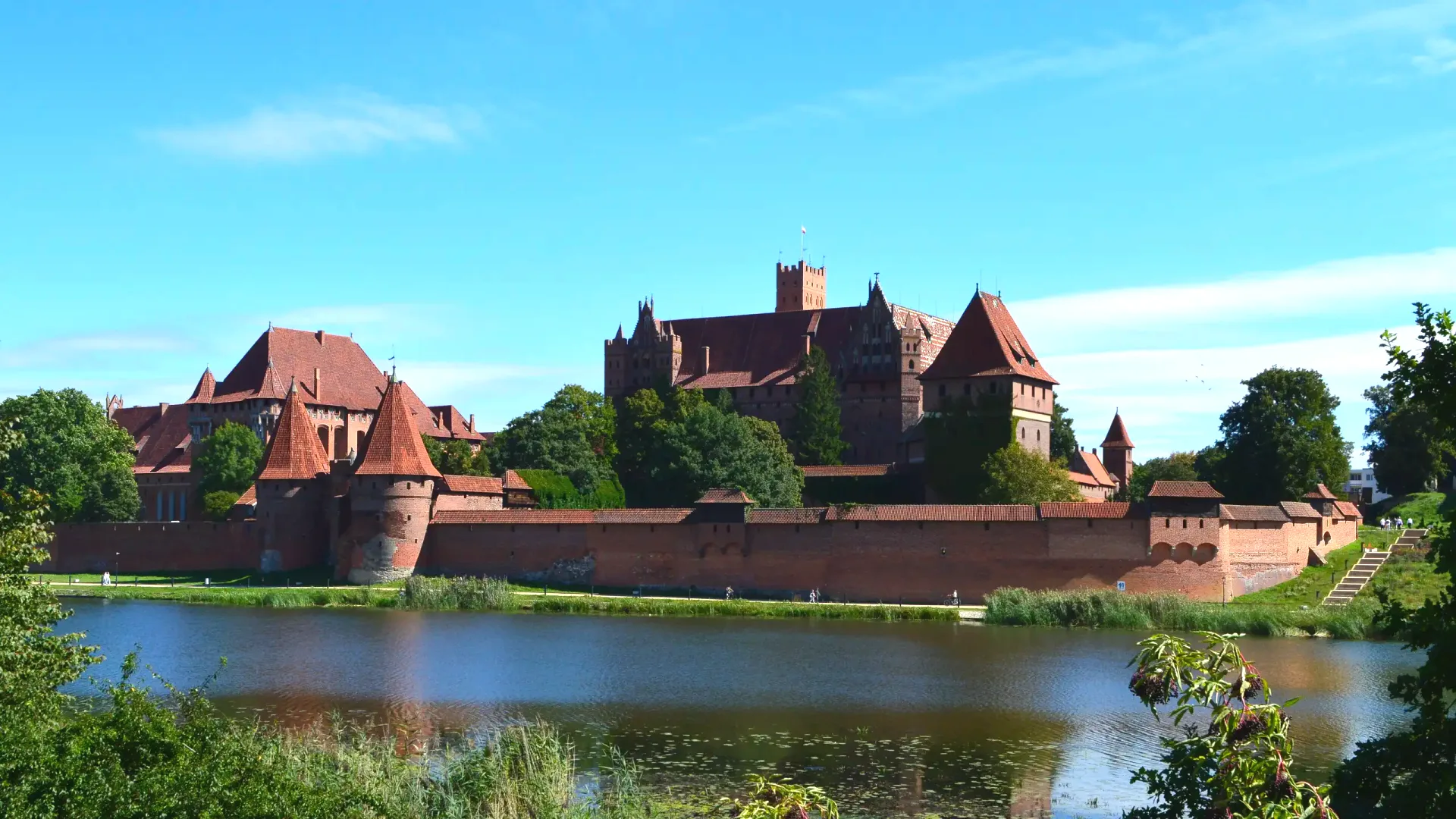
Malbork and Gdańsk are natural companions and reluctant rivals for your time. The castle is the largest brick fortress on earth and a UNESCO site; the city is one of the great Hanseatic old towns of the Baltic; and they sit on the same railway line, close enough that on the current timetable the fastest expresses connect Gdańsk Główny and Malbork in as little as twenty-four minutes, with regional trains taking about an hour and services departing several times each hour. That proximity tempts every visitor with a two-in-one day — and the day genuinely works, provided you respect one number: the castle museum's own advice that the full Malbork visit needs no less than three and a half hours. Build the itinerary around that block and everything else falls into place; treat the castle as a two-hour stop and you will spend the train home listing the rooms you missed. This guide gives you the sequencing that works, the timings verified on the current timetable, the evening extensions, and the seasonal traps that quietly sink one-day plans.
The Case for Castle First
Almost every version of this day improves when Malbork comes first. The reasons stack. The castle's quietest, most photogenic hours are the first after its nine o'clock opening, before the coach groups converge on the late-morning windows — so an early entry slot buys you the chapter house and the Grand Master's Palace at their calmest. The castle is also the fixed appointment of the day: your admission works on a thirty-minute entry window, a half-hour period in which you present yourself at the gate, and it is far easier to hit a morning window off a short, frequent train ride than an afternoon one at the end of a drifting city morning.
Gdańsk, by contrast, is an unticketed, free-flowing pleasure that improves as the day ages. The Główne Miasto — the showpiece core around ulica Długa, the Long Market and the Motława waterfront — asks for wandering rather than scheduling, its restaurants and cafés serve you better at five in the afternoon than at nine in the morning, and the amber-warm façades photograph best in low evening light. A city that rewards unstructured hours belongs at the end of the day; a castle that rewards discipline belongs at the start. Sequencing is the whole game.
The reverse order exists for one audience: visitors whose Malbork target is the evening rather than the interiors. If your castle ambition is the grounds at golden hour or a summer night tour, then a Gdańsk morning followed by a late-afternoon train to Malbork is the right shape — covered properly in the evening section below. For everyone who wants the full Historical Castle Route, though: castle first, city second, no exceptions worth making.
The Morning: Gdańsk to the Castle Gate
The logistics are almost embarrassingly easy. From Gdańsk Główny, direct trains to Malbork depart several times an hour through the morning across three tiers: express EIP and IC services covering the hop in roughly twenty-four to thirty-one minutes, and Polregio regional trains taking about fifty minutes to just over an hour. Checked against the live timetable for a typical August weekday, a traveller leaving between eight and ten in the morning has a choice of at least three departures per hour — which means a missed train costs minutes, not the plan. Add the flat fifteen-minute walk from Malbork station to the castle gate, and door-to-gate from central Gdańsk runs under an hour on an express.
Aim your booking at an entry window between nine and ten thirty. That start, against the museum's three-and-a-half-hour minimum for the Historical Castle Route, has you finishing the full circuit — audio guide, exhibitions, terraces and the moat walk — between one and two in the afternoon with no forced march. Remember the mechanics: the window is a thirty-minute admission period, not a tour departure, so a train that lands you in Malbork twenty minutes before it opens is a comfortable connection, not a tight one. Leave big bags in Gdańsk or in the free lockers at the castle's ticket office building, since large backpacks are barred from the routes.
Lunch belongs to Malbork town. The cafés and restaurants along ulica Kościuszki and near the river handle the post-castle meal well, and eating before the return train converts the journey back into a rest rather than a race to a late Gdańsk lunch. Before you leave, walk two extra minutes onto the Nogat bridge for the western panorama — the classic full-length view of the walls you have just been inside, and the correct closing photograph for the morning.
The Afternoon: Back to the Hanseatic City
Trains back run just as frequently, and an early-afternoon express returns you to Gdańsk Główny by mid-afternoon with four to five hours of city left. Spend them on foot in the Główne Miasto: enter through the Golden Gate onto ulica Długa, run the length of the painted merchant façades to the Long Market and the Artus Court, pass Neptune's Fountain, and emerge through the Green Gate onto the Motława embankment — the postcard axis of the city, walkable in an hour and worth three. The colossal brick mass of St Mary's church anchors the northern streets, and its presence makes a neat thematic rhyme: the same North European brick-Gothic tradition you saw militarised at Malbork in the morning, here turned civic and devotional.
The waterfront rewards the last daylight hours. The Motława's twin embankments — the old town side with the medieval Crane, the Ołowianka and Granary Island side with its rebuilt frontages — fill with promenading crowds toward evening, and the amber shops, museums and cafés of ulica Mariacka offer the day's unhurried browsing. Dinner in the Główne Miasto or on the water closes the loop. It is a generous afternoon rather than a complete Gdańsk visit — the city can absorb days — but paired with the morning's castle it makes one of the strongest single days available anywhere on the Baltic.
Two structural notes keep the afternoon honest. First, do not attempt to bolt a third anchor onto the day — Sopot's pier, Westerplatte or Oliwa each cost more time than the remaining schedule holds, and the day's quality lives in its unhurried second half. Second, if your base is actually Warsaw rather than the coast, this same day works as the middle of a triangle: morning express north to Malbork, the castle, the short hop to Gdańsk for the afternoon and a night's stay, returning south the next day. The castle sits on the main line; use the geometry.
The Evening Variant: Grounds and Night Tour
Flip the day when your Malbork ambition is atmospheric rather than encyclopaedic. Spend the morning and early afternoon in Gdańsk, take a late-afternoon express to Malbork, and use the castle's evening layer: in the spring–summer season the Castle Grounds Route runs from 16:45 to 20:00 with last entry at 18:30, offering the courtyards, terraces, St Anne's chapel, moats and fortifications in the day's best light. You forgo the interiors — this route includes no chambers or exhibitions — but you gain the walls at golden hour with a fraction of the daytime crowd, and after seven in the evening ticket sales move to the online channel and the card-operated machine, so carry a card or a charged phone. In the autumn–winter season (1 October 2026 to 25 April 2027) there is no evening layer: the grounds route runs 13:00 to 16:00 with last entry at 14:30.
In high summer the evening menu deepens. For individual visitors the museum runs night tours from the start of May to the end of August — about ninety minutes through the grounds, cloisters and selected interiors after dark, departing Wednesday to Saturday at nine in the evening from early June, with English-language departures every Friday in June, July and August. It pairs with dinner in Malbork town between arrival and the tour, in the pattern the town's restaurants have long since optimised for.
The evening variant's only hard requirement is the return. Services back toward the coast run into the late evening, but the exact final departures shift with each timetable revision — so before committing to a nine o'clock castle event, confirm the night's last workable trains for your specific date and write the time somewhere you will see it. An overnight in Malbork town dissolves the constraint entirely and tees up a second, deeper castle visit the next morning; more than a few one-day plans convert on the spot once the walls light up.
Seasonal Traps and Fine Print
The Monday trap sinks more combined days than any other detail. On Mondays the castle offers only the free Castle Grounds Route — passes from the ticket office, no interiors — which reduces the morning's centrepiece to an exterior walk. If your one available day is a Monday, invert the plan: make it the Gdańsk day with an evening grounds visit at Malbork, or shift the castle to any Tuesday-to-Sunday. The museum also closes fully on a handful of holidays, including New Year's Day, Easter Sunday, All Saints' Day and the Christmas period, and quotes modified short hours around several others — worth a calendar check whenever your date sits near a Polish public holiday.
Season changes the day's shape more than its feasibility. The timings in this guide reflect the spring–summer season running to the end of September 2026, with its 16:30 last entry for the full route and evening grounds hours; outside it, hours contract and the evening layer largely disappears, so a winter combined day becomes a tighter morning-castle, afternoon-city affair — still entirely workable, and the castle's quiet season has real charm of its own, but with less slack for a slow start. Summer's generosity runs the other way: enormous daylight, the full evening menu, and the year's biggest crowds, which is exactly why the early entry window is the summer visitor's best friend. For the record, autumn–winter hours (1 October 2026 to 25 April 2027) put the last entry to the Historical Castle Route at 12:45, with interiors closing at 15:00.
Last, the fine print that keeps the day smooth. Book the castle window before anything else and hang the trains off it. Carry a warm layer even in August — the interiors hold their chill. Wear real shoes; the castle's surfaces and Gdańsk's cobbles are a combined assault on flimsy soles. And hold the museum's three-and-a-half-hour figure as the one non-negotiable block in the schedule. Every failed version of this day shaved the castle; every successful one protected it.
Frequently asked
Can you really see Malbork Castle and Gdańsk in one day?
Yes, comfortably, with the right order: castle first on a morning entry window, city second. Express trains cover Gdańsk Główny to Malbork in roughly twenty-four to thirty-one minutes with several departures an hour, and protecting the museum's minimum of three and a half hours at the castle still leaves a generous Gdańsk afternoon and evening.
Should I visit Malbork or Gdańsk first?
Malbork first in almost every case — the castle is quietest in the first hours after its nine o'clock opening and runs on a timed thirty-minute admission window, while Gdańsk's old town is free-flowing and at its best in the afternoon and evening. Reverse the order only if your castle target is the evening grounds or a summer night tour.
How frequent are the trains between Gdańsk and Malbork?
Very — on the current timetable, direct services leave several times an hour through the day, mixing express EIP and IC trains at about twenty-four to thirty-one minutes with Polregio regional services at around fifty minutes to just over an hour. A missed train typically costs minutes rather than the itinerary.
Does the one-day plan work on a Monday?
Poorly. On Mondays only the free Castle Grounds Route operates — courtyards, terraces and fortifications, with no interiors — so the castle morning loses its centrepiece. If Monday is your only day, flip the plan to a Gdańsk day with an evening grounds walk at Malbork, or move the castle to any Tuesday-to-Sunday date.
Can I add the night tour to a combined day?
In summer, yes — night tours for individual visitors run from May to the end of August, at nine in the evening Wednesday to Saturday in high summer with English departures on Fridays. Just confirm the night's last trains back to Gdańsk for your date before committing, or plan to stay over in Malbork town.